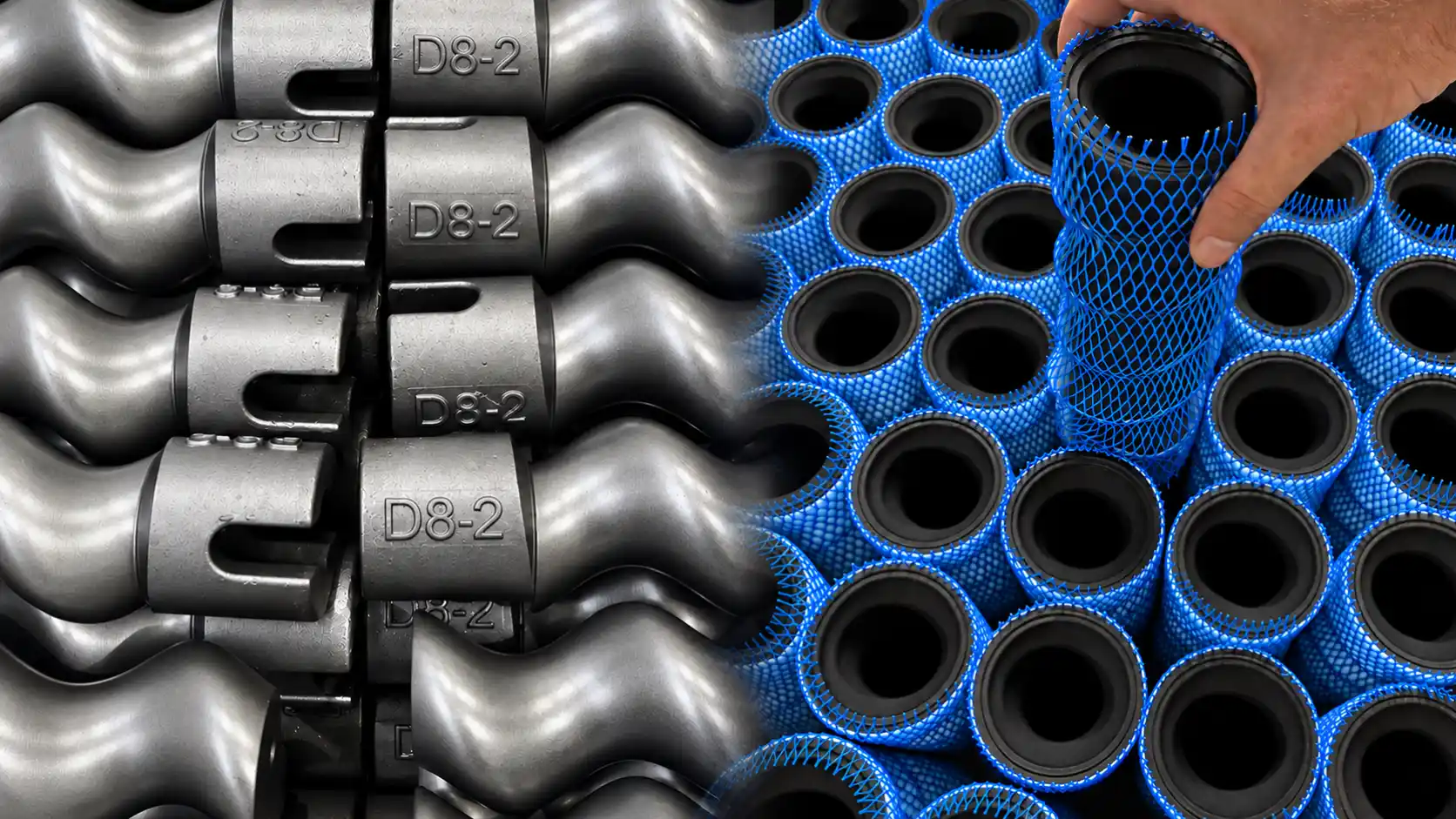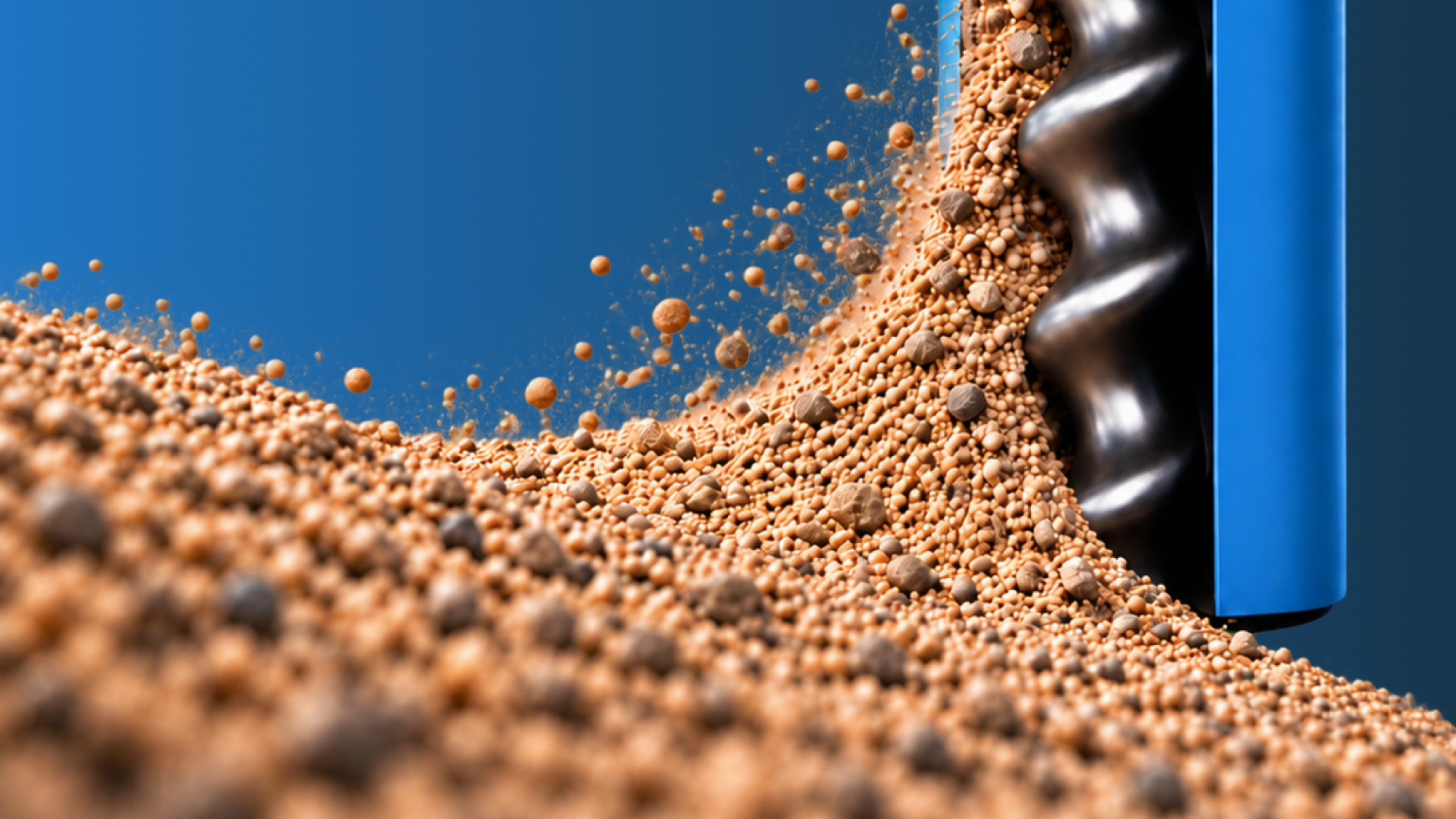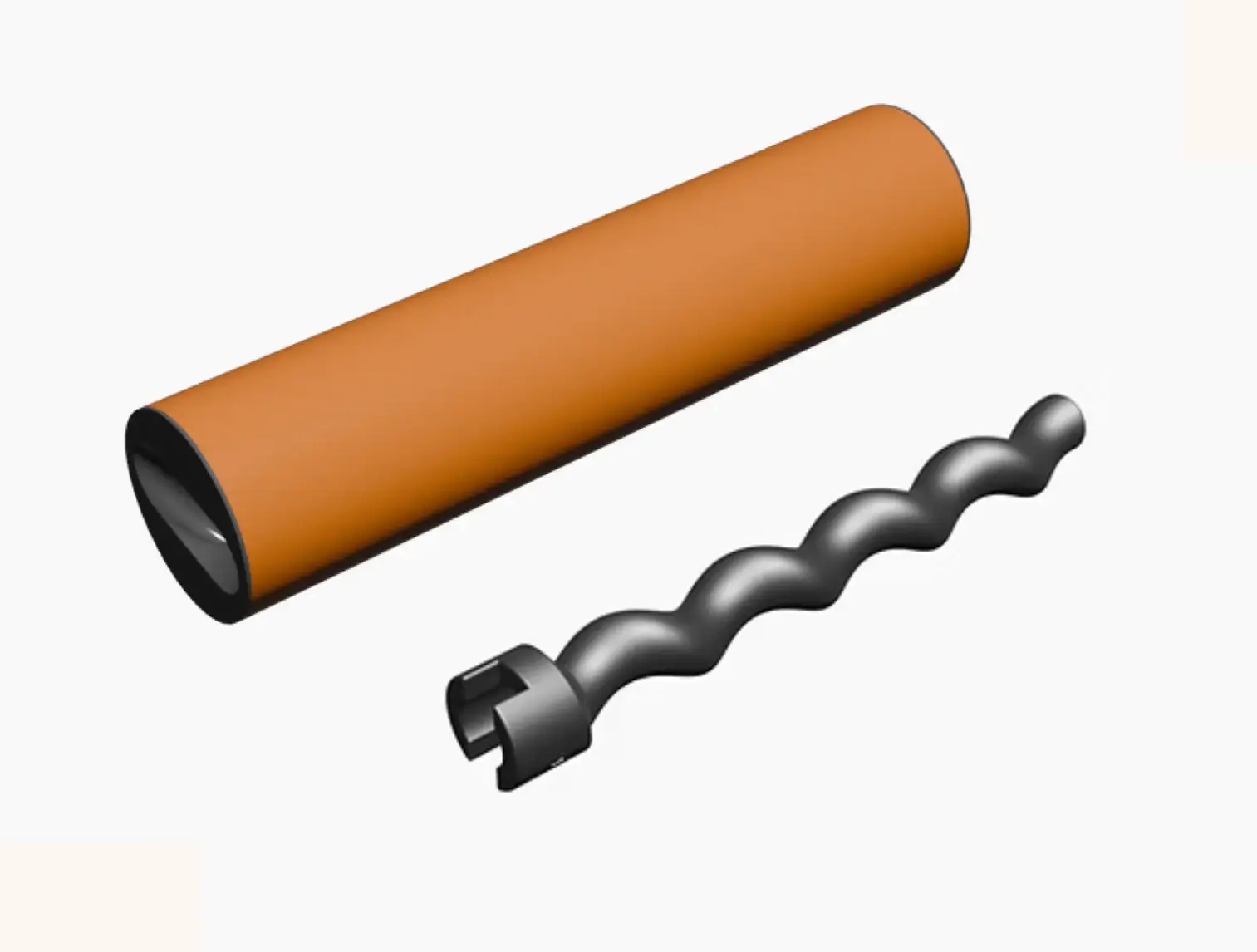
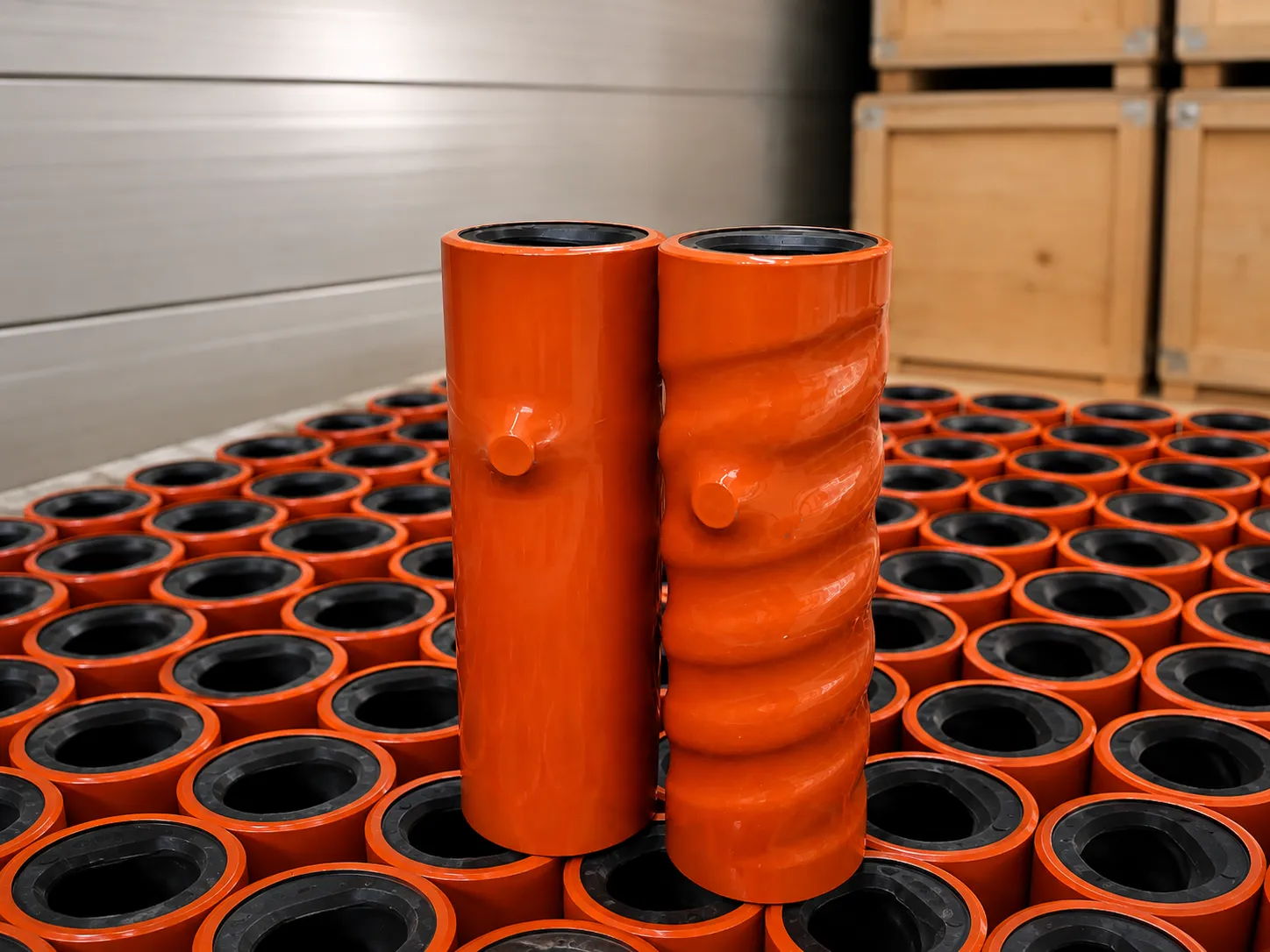
A stator for a plastering machine works together with the rotor: the rotor–stator pair seals the working chambers and moves plaster or mortar through the pump. How long the stator maintains working pressure and how it performs under prolonged load depends largely on the design of its rubber wall.
Let’s look at the difference between a straight stator and a twister-type stator and which working conditions each design is best suited for.
Straight Stator
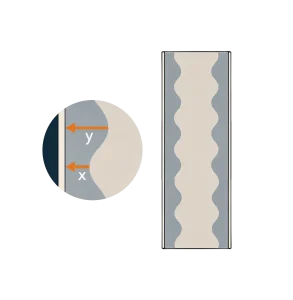
A straight stator has a round outer casing with a helical rotor operating inside. Due to the design, the thickness of the stator’s rubber wall varies around the circumference: in some areas it is thicker, while in others it is thinner.
During operation, the rubber heats up and is constantly exposed to pressure. Under high or prolonged loads, the uneven wall thickness can contribute to deformation. As a result, the seal between the rotor and stator may gradually weaken, allowing some material to move back between the working chambers while pressure and output decrease.
At the same time, a straight stator remains a practical and economical solution for standard plastering and construction mixes, especially when the equipment operates with pauses and is not exposed to continuous heavy loads.
Twister-Type Stator
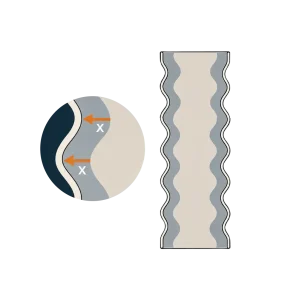
In a twister-type stator, the internal profile is also reflected on the outside of the casing. This allows the rubber wall to maintain a more uniform thickness throughout the profile.
This design increases the stator’s surface area and supports more effective heat dissipation. The metal casing supports the rubber section and helps it maintain its shape under load.
As a result, a twister-type stator is better suited for prolonged operation under load, especially where stable working pressure is important.
Its advantages are most noticeable:
- during long working shifts;
- at high pump output;
- during continuous operation with fewer pauses;
- when working with more abrasive construction mixes.
Watch the Explanation from a Rotors Tech Specialist
A Rotors Tech specialist explains the difference between a straight stator and a twister-type stator and shows how their design affects rotor–stator performance under load.
Straight or Twister-Type Stator — Which One Should You Choose?
The right stator depends primarily on the operating mode of the plastering machine, the material being pumped, and the required output.
For lighter or intermittent work, a rotor–stator pair with a straight stator helps keep consumable costs lower and performs well under standard operating conditions.
If the pump runs for long periods, works under high load, or handles abrasive mixes, a twister-type stator can maintain its operating characteristics more effectively during prolonged use.
Neither stator type is universally better. The correct choice depends on the specific machine, material, and operating conditions.
How to Choose the Right Rotor–Stator Pair for Your Machine
Not sure which stator is suitable for your equipment?
Send us the model of your plastering machine or pump and the type of mix you use. Rotors Tech specialists will help you select a compatible rotor–stator pair based on the required output and operating conditions.
We manufacture rotors, stators, and rotor–stator pairs for widely used plastering machines and mortar pumps.
Leave your request in the form below — we will help you choose the right rotor–stator pair for your machine.