Rotor-stator wear in a progressive cavity pump usually develops over time rather than appearing as a single sudden event. When the pumped mixture contains abrasive solids, the rotor and elastomer stator operate under continuous contact while particles pass through the working cavities and near the sealing lines. Their effect accumulates and can gradually reduce pressure capability and volumetric efficiency.
The rate and pattern of wear depend on more than the nominal grain size. Particle shape, size distribution, hardness, composition and concentration all influence how the mixture behaves inside the pump. Monitoring operating trends helps identify the change early and plan maintenance before output becomes unstable or production stops.
How abrasive particles affect a rotor-stator pair
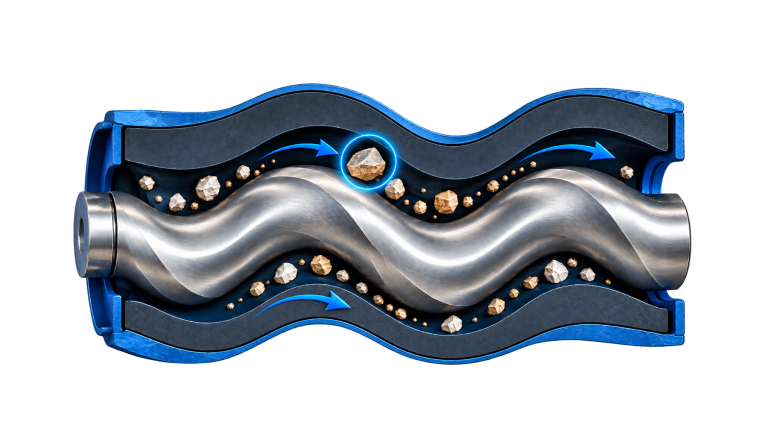
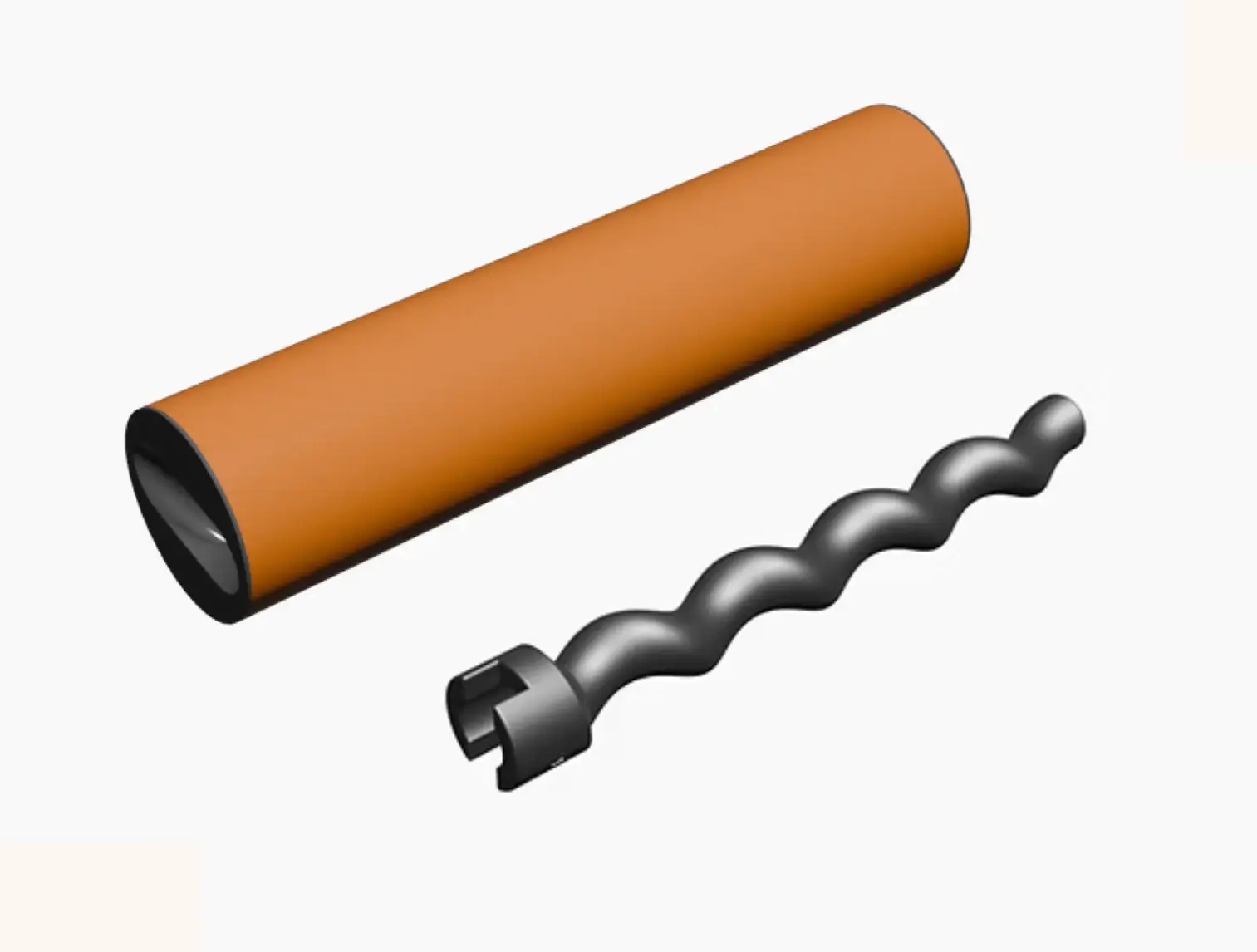
The metal rotor turns eccentrically inside the elastomer stator. This geometry creates sealed cavities that move the mixture from the inlet towards the outlet. Effective sealing between the two components is essential for developing pressure and limiting internal slip.
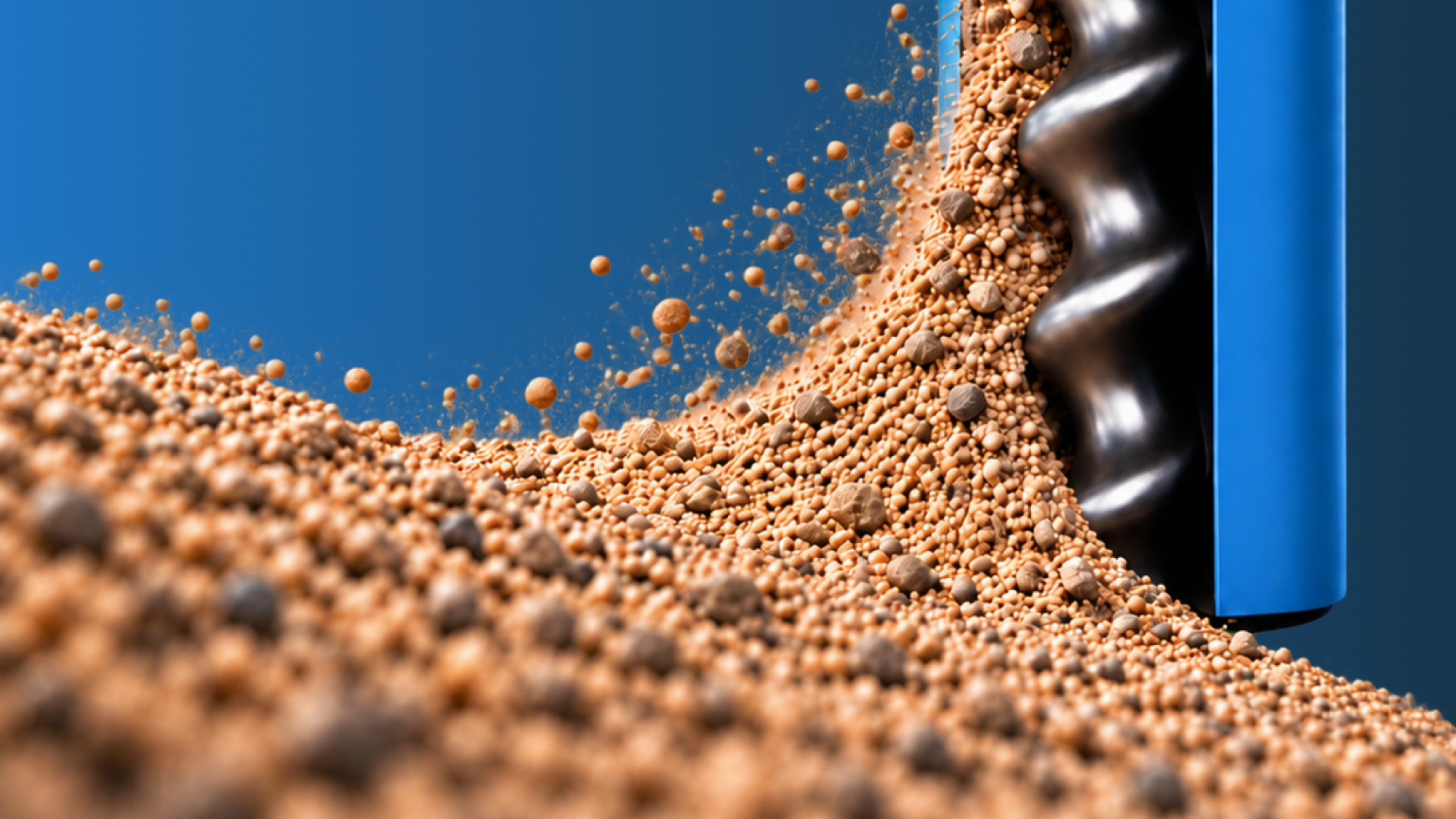
Solid particles move with the mixture through these cavities. Depending on their properties and the operating conditions, they may abrade elastomer surfaces, score the rotor or contribute to local damage near the sealing line. The process is normally progressive: as the sealing condition deteriorates, internal leakage increases and the pump may deliver less material at the same rotational speed.
Wear is also influenced by factors outside the particle itself, including mixture consistency, lubrication provided by the pumped medium, pressure, speed, temperature and the suitability of the rotor-stator pair for the application. For that reason, visible damage should always be assessed together with actual operating data.
Particle shape, hardness and concentration
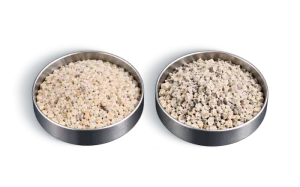
Two materials with a similar nominal particle size can behave differently in the same pump. Rounded grains generally move through the mixture with less cutting action than angular grains of comparable hardness. Sharp edges can create more concentrated contact and may intensify surface damage.
Hardness matters as well. A particle that is harder than the working surface can be more damaging than a softer particle of the same size and shape. Higher solids concentration also increases the number of particle interactions passing through the rotor-stator pair.
The main properties to review are:
- grain shape: rounded, angular or irregular;
- particle hardness and mineral composition;
- concentration of solids in the mixture;
- maximum grain size and complete size distribution;
- consistency and water content of the prepared material.
These characteristics should be evaluated as a system. Grain size alone does not fully describe abrasiveness.
Why particle-size distribution matters
The particle-size distribution influences both mixture flow and local wear conditions. A high proportion of fines may increase water demand and viscosity, depending on the formulation. Too many coarse particles can create a risk of local wear or clogging, especially when individual grains exceed what the selected rotor-stator pair or machine can pass.
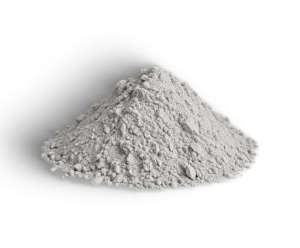
Excess fine fraction
Possible effect: increased water demand or viscosity.
What to check: formulation, dosing and consistency.
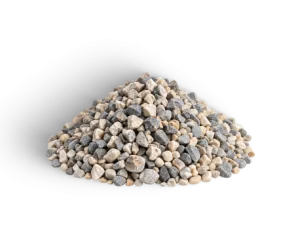
Particles within the specified range
Possible effect: more stable material flow.
What to check: machine and rotor–stator pair limitations.
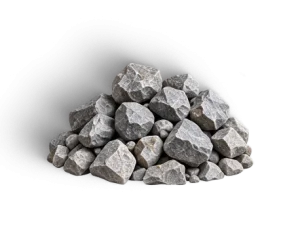
Excess coarse fraction
Possible effect: risk of localized wear or blockage.
What to check: maximum particle size and screening.
The permitted maximum grain must be checked for the specific pump, rotor-stator pair and material. A general rule cannot replace the technical data for the actual equipment configuration.
Four signs of rotor-stator wear
Abrasion-related wear can often be detected by comparing present performance with the pump’s normal baseline. The most useful signs are:
- Lower pressure. The pump struggles to reach or maintain the working pressure previously achieved under comparable conditions.
- Reduced output. Less material is delivered at the same RPM, even though the mixture and installation conditions have not intentionally changed.
- Higher RPM required. The operator needs more rotational speed to maintain the former flow rate. This is a symptom to investigate, not a long-term correction for wear.
- Visible surface damage. Inspection reveals scoring, pitting, worn areas or loss of sealing contact on the rotor or stator.
No single symptom proves that the rotor-stator pair is the only cause. A change in material consistency, a restriction in the line, leakage, incorrect adjustment or another mechanical fault may produce similar effects. Diagnosis should therefore combine operating data with inspection.
How to monitor wear before downtime
A simple record of pressure, output and RPM makes gradual change easier to see. Measurements should be compared under similar conditions: the same material formulation, hose layout, operating pressure and preparation method wherever possible.
For routine monitoring:
- Record the normal pressure, output and RPM for a correctly operating pair.
- Check the prepared mixture against its recipe and allowable particle size.
- Track whether pressure falls or required RPM rises over time.
- Inspect the rotor and stator when performance changes or during planned service.
- Replace or investigate the pair before the remaining performance margin becomes too small for stable operation.
This approach supports planned maintenance and helps separate progressive component wear from a one-time change in the pumped material.
What to send when selecting a replacement pair
Compatibility depends on the equipment and the application, not only on a visual match. To check a replacement rotor-stator pair, prepare:
- equipment manufacturer and exact model;
- complete marking of the existing rotor and stator;
- clear photos of the components and their connections;
- required working pressure and output;
- material type, consistency and maximum particle size;
- information about the observed wear or performance change.
Enter these details in the contact form below so the Rotors Tech team can check the compatibility of the rotor-stator pair with your equipment and pumped material.