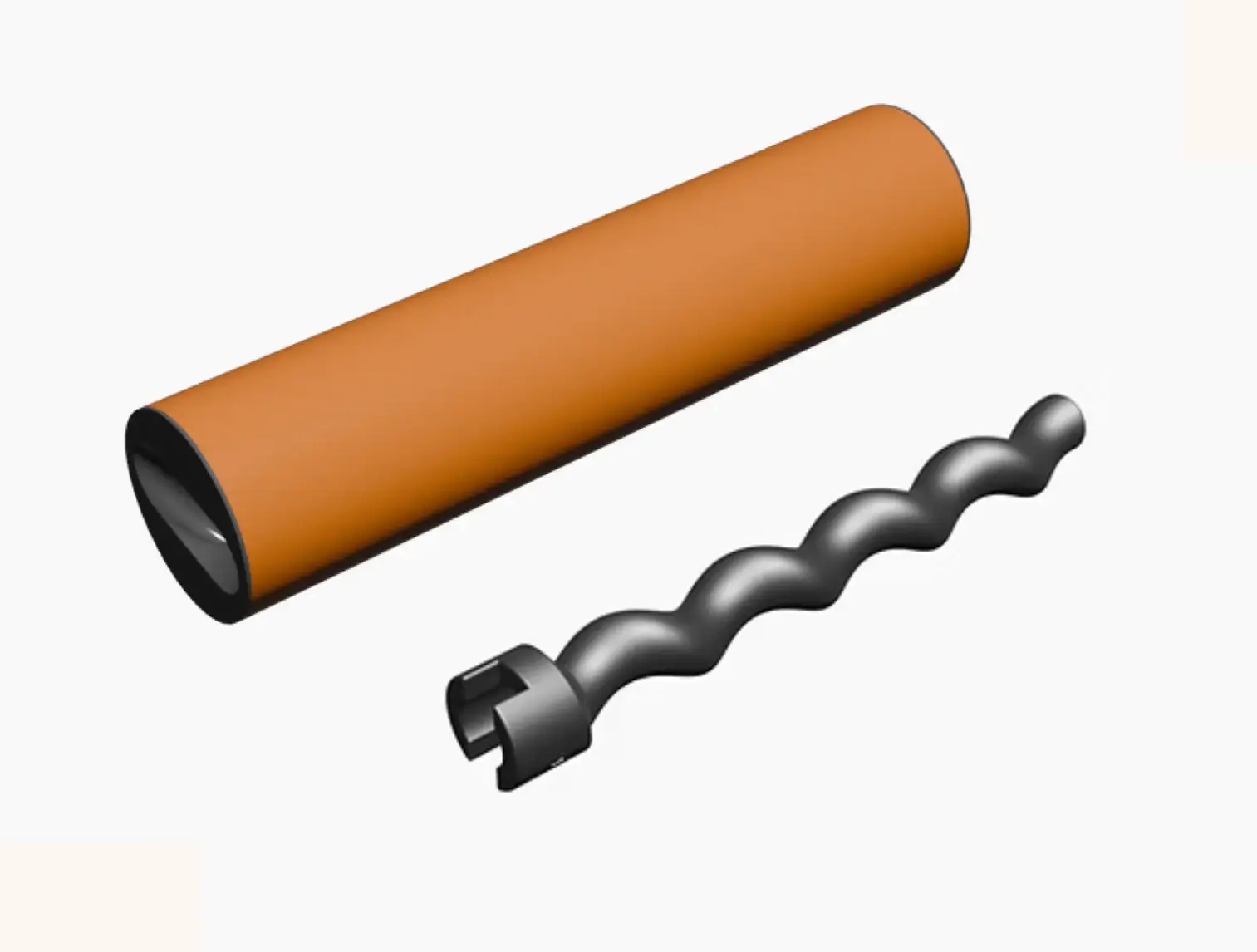
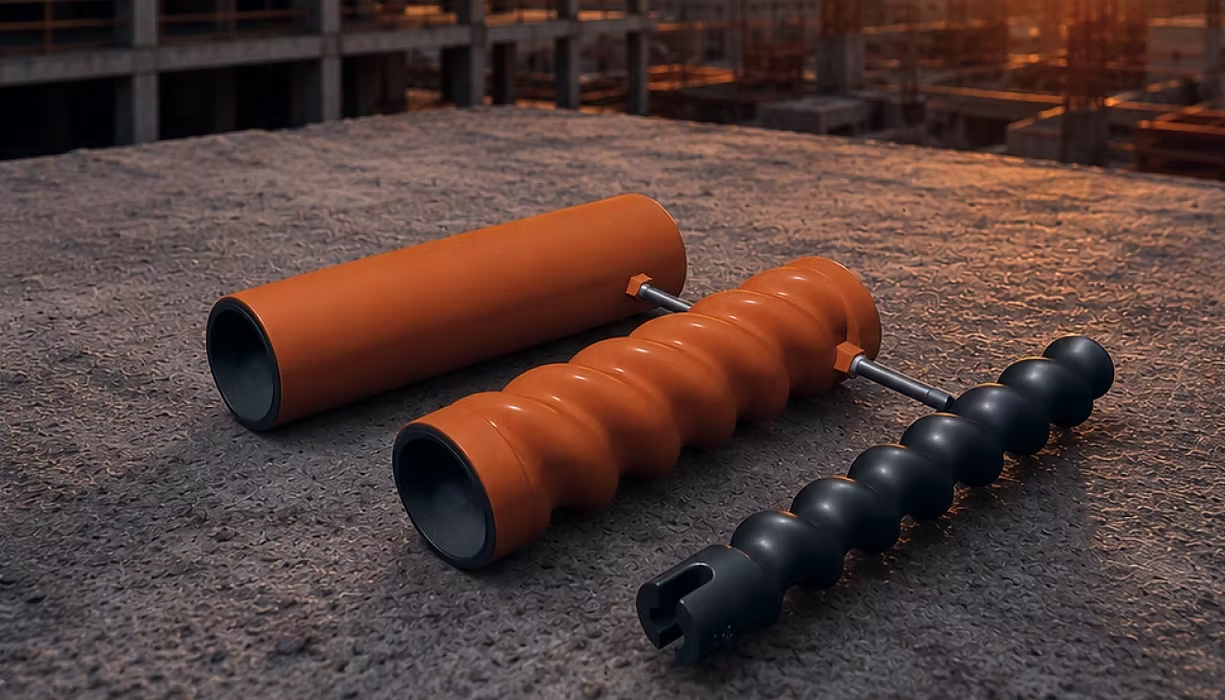
A rotor–stator pair can deliver up to twice the service life — and in most cases, the deciding factor isn’t the component itself. It’s how it’s stored, installed, monitored, and maintained on site.
With over 20 years in rotor–stator manufacturing, we’ve seen identical pairs wear out at completely different rates depending on a handful of everyday habits. Here are the four that matter most.
1. Store spare pairs as engineered components
A rotor and stator begin losing their properties before installation if storage conditions are wrong. Sun, frost, fuel, oils, and moisture all affect the elastomer — and the pair quietly loses service life before it ever reaches the machine.
A dry room, room temperature, and original packaging are the baseline standard. And don’t be alarmed by the protective oil coating on a new rotor: it’s there for storage and is completely normal.
2. Lubricate the pair before installation
The first few seconds of operation are the most critical moment in a pair’s life. At startup, friction between a dry rotor and stator can damage the elastomer immediately.
First, wipe the factory oil off the rotor — that coating is for storage, not operation. Then apply the special lubricant to both rotor and stator to protect the elastomer from friction at startup. This step is mandatory.
3. Track the working pressure
Pressure is one of the most precise indicators of wear. The working standard is roughly 10 bar per pressure stage — so a D 6-3 with three stages runs at about 30 bar.
Record the working pressure of a new pair as your baseline and check it regularly. A drop in working pressure is often the signal that the component is wearing and nearing the end of its service life.
4. Finish every shift with a rinse
Whatever mix is left inside the system dries into an abrasive — and on every subsequent startup, it grinds against the elastomer and accelerates wear.
The fix takes just a few minutes: rinse with water at the end of every shift. Make it a fixed part of the shutdown routine, not something done “if we have time.”
None of these practices is complex or costly. But applied consistently, they’re often the difference between a pair that runs its full service life and one that has to be replaced twice as often.
And long service life starts not only with correct operation, but with the right rotor–stator pair in the first place.
Need a pair that runs its full life?
Working with construction mixes, plastering, screed, or specialty materials?
Get in touch — we’ll help match the right pair to your equipment, material, and operating conditions, so it works as efficiently as possible.
📞 +421 948 893 045